
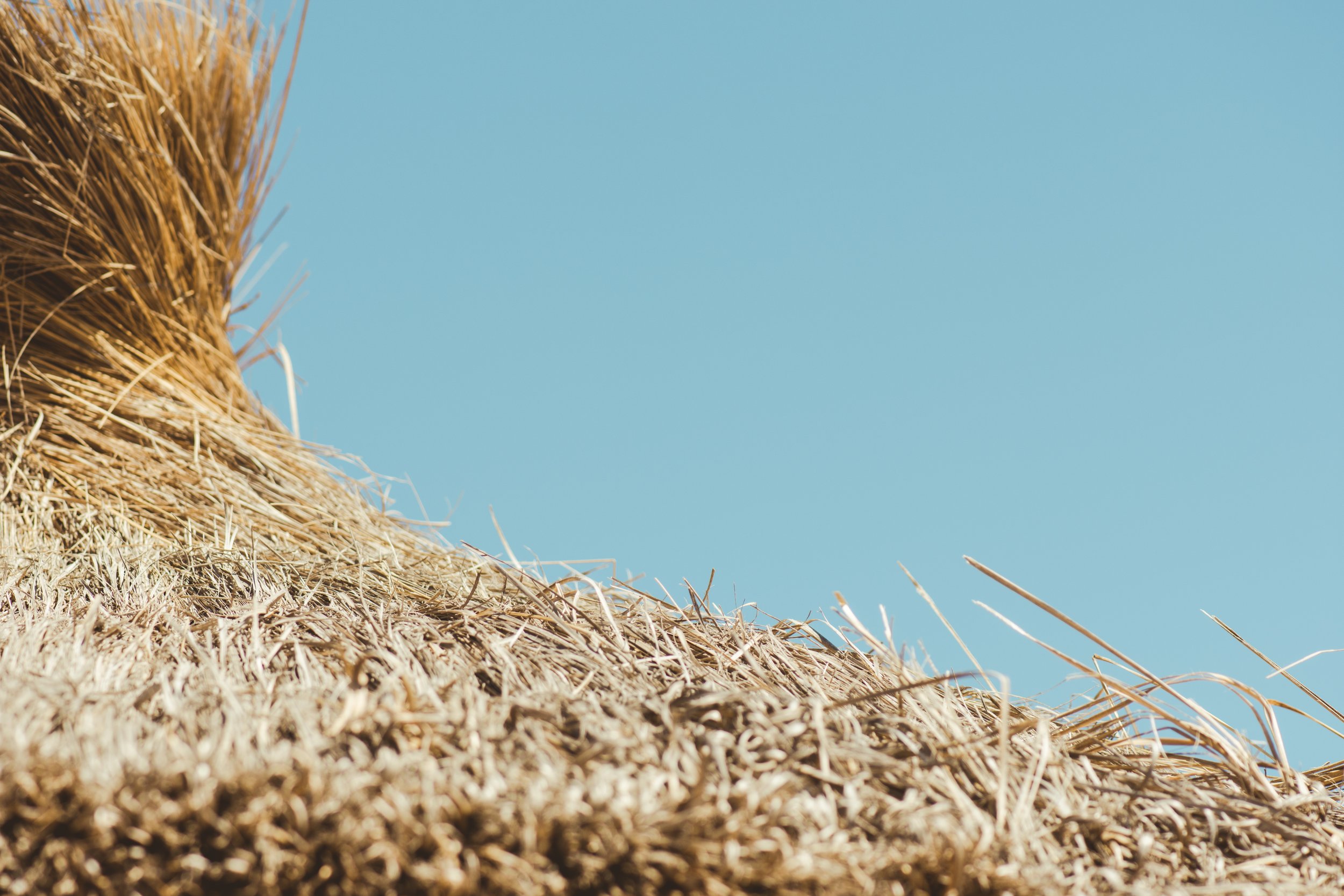
"Wara (or わら)" is perhaps best translated as "leftover rice-straw," meaning the straw that's left over after the rice is harvested. And "wara art" is probably best translated as "mind blowing." Here's how this My Modern Met post describes it:
Fall is here, which in Japan means it’s time for the annual rice harvest. Every year, farmers ensure that the leftover rice-straw, known as “wara,” doesn’t go to waste. The wara is recycled by using it to to feed livestock, improve soil, and in the coastal region of Niigata Prefecture, it’s even used to make giant, beastly sculptures for the Wara Art Festival, held at Uwasekigata Park.
And here are a few representative embeds via Instagram.
Attribution(s): "Straw Protection" provided by Unsplash's Robert Nordahl, who makes his work available via a Creative Commons CC0 1.0 Universal (CC0 1.0) license.