
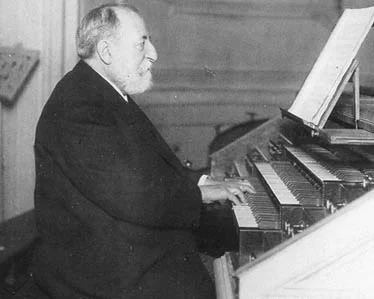
This is the 1-minute mark of the opening movement of Camille Saint-Saëns' Symphony No. 3 in C Minor, Op. 78:
If the first thing that sprang to mind was "vaguely familiar" then here's what happens 20 seconds into the first movement of Franz Schubert's Symphony No.8 In B Minor, D.759:
Interestingly, though, the first is not copying the second, at least if the account given by the superb lecturer and musicologist Robert Greenberg (as well as a significant number of other musical minds) is to be believed. Rather, it's copying this:
When I heard this—when I REALLY heard it for the first time—my mind was blown, at least a little. Not because Saint-Saëns is referencing (at least according to many) a snippet of music and rhythm recognized for its use as the sequence in the Mass for the Dead (though that's cool), but because the symphony's final movement is now transformed into a musical account of Death's Defeat. It's the "Dies Irae" but in a major (and spectacularly triumphant) key!
Here's how this post from the official blog of the Houston Symphony sums things up:
Part of what Saint-Saëns wanted to prove was that the symphony as a genre was not dead...The first and most important clue is the specter of the Dies Irae, which haunts every movement of the symphony. The Dies Irae (“day of wrath”) is part of the traditional Catholic mass for the dead, and its text discusses the Day of Judgment.
...
Then, in the great turning point of the symphony, after the unrest of the beginning, the serene yearning of the Adagio and the vivacious play of shadow and light in the scherzo, the organ enters in all its glory, followed by the symphony’s most famous melody, which Saint-Saëns describes as a “totally transformed,” major key version of the Dies Irae theme.
...
The message is clear: death has been somehow redeemed, transfigured. The unconventional use of the organ, more often heard in churches than in symphonies, also lends a religious air to the music. The intense struggle that follows includes a return of the Dies Irae theme in its original minor form that is ultimately vanquished by the major version, like Michael casting the Devil out of heaven.
